
This year’s ICCAT meeting was a mixed bag for small-scale fisheries with progress on south Atlantic albacore but a lack of consensus on allocated catch limits for yellowfin.
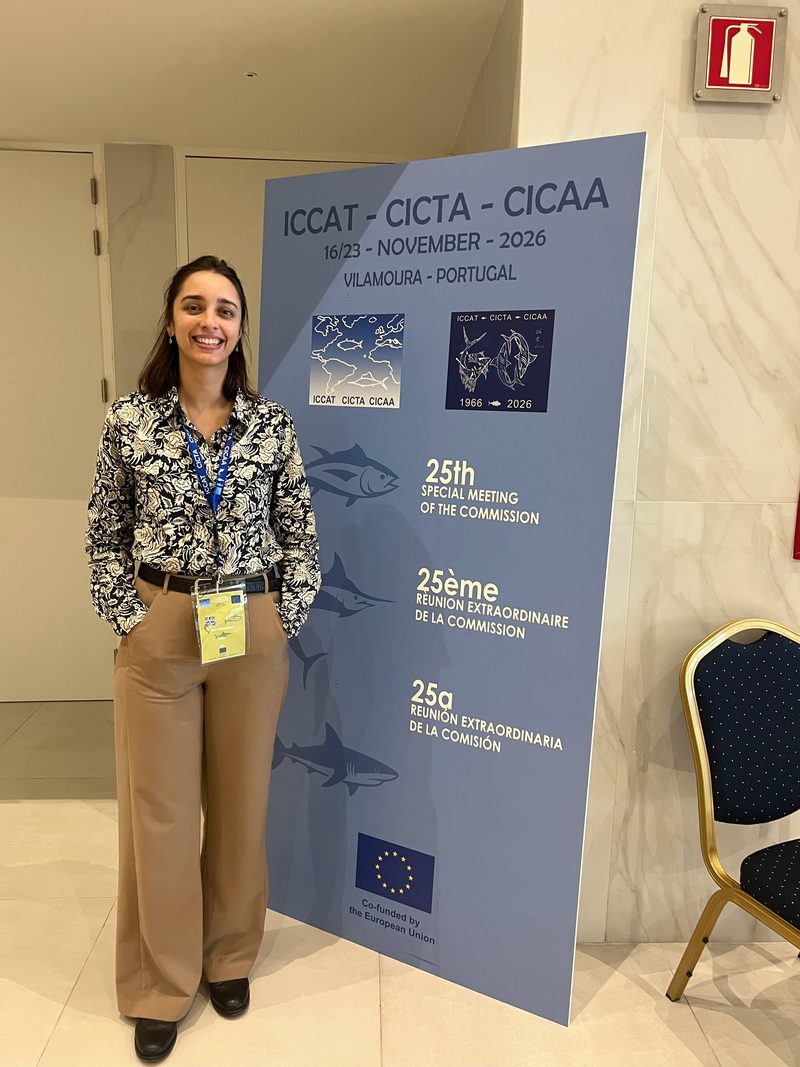
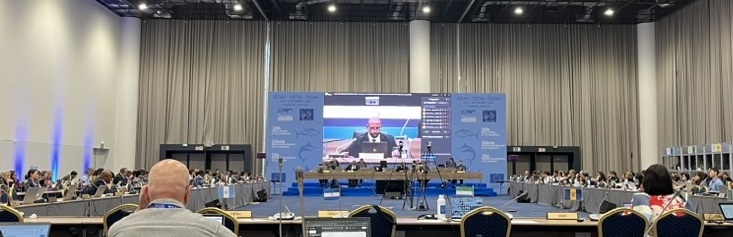
IPNLF attended the meeting of the International Commission for the Conservation of Atlantic Tunas (ICCAT), held this year in Vilamoura, Portugal, from 16-23 November.
ICCAT is a large international organisation with 56 parties. During these meetings, countries fishing for tuna, as well as species like swordfish and sharks, in the Atlantic Ocean and Mediterranean meet to set fisheries management rules. ICCAT manages fisheries for a great number of stocks and species, with a variety of fishing methods used. The key one-by-one fisheries in the Atlantic target bluefin, North and South Atlantic albacore, skipjack, yellowfin and bigeye tuna. The key developments relevant to one-by-one tuna fisheries are as follows:
This stock is vital for pole-and-line fisheries in the south Atlantic. IPNLF welcomes the adoption of an interim measure for south Atlantic albacore, adopted in response to the 2026 stock assessment, which found the stock to be slightly overfished and with lower stock productivity than previously estimated.
 The interim measure lowers the total allowable catch (TAC) from 28,000 t to a total allocated catch of 24,213 t and a 120 t reserve. In tandem, the Commission adopted directions for development of candidate management procedures, keeping ICCAT in line to adopt a management procedure (MP) for this stock next year. This should mean that future required adjustments of TAC take place in line with the MP.
While an even lower TAC would have been needed to meet ICCAT objectives to maintain or rebuild stocks to a 60% or greater probability of occurring in the green quadrant of the Kobe matrix, given the resistance by some members to have any reduction at all this year, IPNLF congratulates South Africa, Brazil, and Uruguay for ensuring a smooth negotiation and adoption of a measure which significantly reduces TAC and provides for transition to the forthcoming MP.
If application of the MP in future years requires further TAC reductions, IPNLF encourages the Commission to ensure that the burden of this reduction is shared in a way that recognises the low-impact and socio-economic value of one-by-one fisheries, in line with Article 6.6 of the FAO Code of Conduct for Responsible Fisheries.
The greatest challenge facing the Commission this year related to updating the tropical tuna measure, Recommendation 24-01. In particular, the Commission was due to adopt a yellowfin tuna allocation which would set individual limits for countries. Setting these individualised catch limits was considered especially important to prevent the fisheries continuing to exceed the TAC. Agreement on yellowfin allocation has proved elusive for several years, with the result that fishing countries are not bound to specific limits and the overall TAC has been consistently surpassed from 2015 to 2024.
Very regrettably, the Commission failed to reach consensus on either the yellowfin TAC or the respective allocations. While yellowfin catches dropped to just below the TAC in 2025, it is likely that catches could climb again, meaning that an effective mechanism to ensure accountability for overcatch remains a priority.
With progress on yellowfin off the table, the Commission turned to bigeye, where the favourable status of the bigeye stock allowed for the possibility to increase the TAC. The Commission did finally reach agreement here, meaning that the TAC for 2027 is set at 85,000 t, up from 73,011 t.
Positively, the Commission adopted the exceptional circumstances protocol for the Western Atlantic skipjack MP as scheduled. This ensures an effective management framework for a stock which is highly important for Brazil’s pole-and-line fleet.
As a result of the standstill on yellowfin negotiations, no discussion on changes to the length of the closure period for fish aggregating devices (FADs) could be adopted either. The closure is in place to try to limit the very high catches of juvenile bigeye and yellowfin tuna caught by purse seiners using FADs. The ICCAT closure period was already reduced from 72 to 45 days in 2024. Several delegations made firm statements that the closure period should not be further reduced until there had been a clear scientific assessment of the impact of the closure, including any change in projections for the yellowfin and bigeye stocks which would result from further reductions in the length of the closure. Further discussions on ways to limit juvenile mortality should be undertaken in the coming years.
However, the Commission did decide to push back the deadline for implementation of the strictest category of biodegradable FADs. This means that the strictest category of biodegradability will only be required as of 1 January 2031, delayed from 2028 in the existing ICCAT measure and two years later than the deadline in the Indian Ocean.
IPNLF continues to urge ICCAT to strengthen its FAD management, including through clearer rules on abandoned, lost, and discarded FADs, establishment of an ICCAT dFAD Registry, and a closure period aligned with the precautionary approach and the best available science on juvenile mortality.
If you would like to know more about the work we do at RFMOs, please contact Maia Perraudeau (maia.perraudeau@ipnlf.org)