
Fishers must be at the centre of discussions about safety at sea.
Working at sea remains one of the world’s most dangerous professions and more needs to be done to protect the safety of fishers.
This was the message from NGOs, fisher unions, researchers, medical experts, and industry representatives from across the world who joined us in Bali last week for the FISH Platform Conference 2025 on safe and decent work at sea.
The FISH Platform is a world-leading group of experts involved in safety and health in the fishing industry, and has over 150 members in 44 countries from around the world. The group includes representatives from workers, employers, governments, training institutes and fisheries schools.
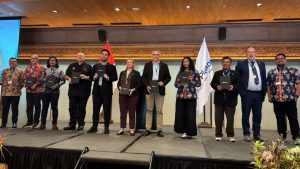
The FISH Platform event is one of the few global gatherings dedicated entirely to fisher health and safety.
Shannon Hardisty, IPNLF’s social responsibility lead, led the signing of the Bali Declaration, a shared commitment to improving the health, safety, and working conditions of fishers across all types of fisheries. The declaration recognised that many fishers operate in informal or unregulated sectors, making them vulnerable to exploitation, unsafe practices, and exclusion from social protection systems. Key areas of the Bali Declaration include:
• Inclusive governance: Fishers and their communities must be directly involved in shaping policies that affect their lives and livelihoods.
• Data, transparency, and accountability: Better data collection and transparent mechanisms are needed to track progress and hold stakeholders accountable.
•Capacity building and collaboration: Investment in training, education, and cross-sector collaboration will create safer, fairer, and more resilient fisheries.
•A shared vision of dignity and safety: The overarching goal is a world where every fisher enjoys dignity, safety, and equitable treatment, regardless of nationality, vessel size, or area of operation.
• Fisher-centred decision-making: Improving safety requires centring fishers at every stage of decision-making and ensuring their perspectives guide policy and practice.
• Relevant and accessible solutions: Innovation, research, and interventions must be practical, accessible, and backed by sustainable financial support.
• Addressing labour disparities: The declaration recognises the different realities faced by domestic and migrant fishers and commits to addressing the specific vulnerabilities of each group.
It also called for universal protection for all fishers, alignment with international labour and safety standards, and the creation of decent work conditions that include safe workplaces, fair wages, medical care, and protection from exploitation.
The joint commitment was signed by IPNLF, FISH Platform, the International Fund for Fishing Safety, Greenpeace Indonesia, Stella Maris, SBMI, the International Marine Health Association, Human Dignity Group, Lloyd’s Register, and others.
Fellow participants travelled from the United States, Bangladesh, Belgium, New Zealand, South Africa, Indonesia, Vietnam, Thailand, and beyond to address the urgent and often overlooked risks facing fishers, who remain among the most vulnerable workers in the world.
A defining feature of the meeting was the central role played by fishers themselves. Multi-generational fishers from Indonesia, Northern Ireland and Scotland shared firsthand accounts of life at sea — from exhaustion and sleep deprivation to the long-term stresses and mental health challenges that follow them home.
Ocean workers are increasingly being exposed to severe weather
Climate change emerged as a growing threat throughout the discussions, with small-scale fishers increasingly exposed to severe weather, ecological disruption, and pressure to take greater risks at sea.
Nearly one in five (17%) ocean workers identified climate change as the greatest personal safety risk they face, according to a report by Lloyd’s Register Foundation published in 2025. One third of ocean workers reported having personally experienced serious harm from severe weather in the last two years – compared to only 20% of other workers.
Speaking at the event, Martin Purves, Managing Director at IPNLF, who himself spent more than four years at sea on industrial and small-scale fishing vessels across the world as an at-sea observer and research scientist, stressed the need for greater inclusion of these voices. “Fisher safety should be at the top of the agenda, but small-scale fishers remain underrepresented in research about fisher safety and at the level of support they receive from governments and the private sector, despite the fact that they make up the vast majority of fishers”.
Cor Blonk, chair of the FISH Platform, organiser of the conference added:
“At present, in many places, policymakers, industry and the supply chain pay too little attention to safety, health and decent working and living conditions on board to be able to speak of truly sustainable fishing. Ratification and implementation of ILO C.188, alongside inspection and enforcement, would be a major step forward in improving the situation for fishermen. Many countries are doing this for their seafaring fleets with the ratification of the Maritime Labour Convention.”
As participants affirmed in the closing session, even a small step in the right direction is better than no step at all — and we are stronger together when we work to put fisher safety at the top of agendas.