From expanding quality improvement and fisher safety work to behaviour change campaigning, we look ahead to our 2026 goals and priorities.
2026 promises to be a pivotal year for IPNLF, as we expand our geographic footprint, amplify our policy and markets work and scale up our work with fishing communities. This year, you’ll see us expanding our capacity to advance our key strategic themes: on the water, in the market and ocean-wide policy. To do this, we’ll be working more closely with fishing communities than ever before, collaborating with our key partners, and doubling down on our efforts to educate the market.
Scaling quality improvement at pace
Quality improvement remains central to IPNLF’s mission and is vital to ensure we unlock value from the one-by-one value chain. Over the next two years, we aim to train 700 fishers using Standard Operating Procedures (SOPs) and replicable quality-assurance training modules. By systematising training delivery while remaining responsive to local contexts, we can scale impact without compromising effectiveness, helping fishers meet market requirements, improving safety and increasing the value of their catch.
 Putting fishers at the centre of safety
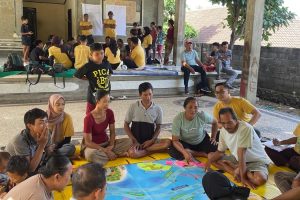
We’ve also received additional funding to carry out more work to promote safety at sea for low-impact small-scale fisheries. Our 2026 work will improve safety in Indonesia by identifying accident risks, co-developing practical safety materials, delivering financial literacy training with fishing communities, and working with fishers to build first aid skills and reduce infections. This work will also help to deliver integrated health services to a remote fishing community with limited access to care in April. Our fisher safety work will lay the groundwork for a multi-year programme that supports both community wellbeing and sustainable fisheries’ development. We look forward to working with our private sector partners to build fisher safety programmes that strengthen the one-by-one supply chain.
Growing our footprint in Indonesia
In 2026, we’ll expand our work to four new fishing communities in Indonesia. IPNLF’s expansion includes scaling up our solar-powered ice maker activities, alongside the rollout of structured quality improvement programmes. Together, these efforts will dramatically improve post-harvest handling, reduce fuel use and waste, and increase income opportunities for small-scale fishers.
Over the next two years, this approach is expected to lead to a ten-fold increase in the number of fishers trained, ensuring that quality, safety and sustainability are embedded at community level. Working closely with Indonesia’s Ministry of Marine Affairs and Fisheries (KKP) and IPNLF members, we will also continue to strengthen recognition of pole-and-line fishing as a high-quality, low-impact and nationally strategic fishing method.
 Entering new territories: Malaysia
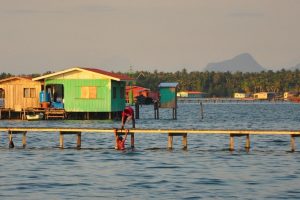
We’re excited to begin work in Sabah and on Mabul Island in Malaysia, extending IPNLF’s work in a new region. Our work will focus on understanding local fisheries contexts, building partnerships with communities and authorities, and identifying opportunities to support low-impact tuna fisheries through quality improvement, market access and policy engagement.
Helping more people switch to one-by-one fishing gear
We’re working to promote fisheries that protect ocean biodiversity in areas beyond national jurisdiction (ABNJ). As part of our work on the FAO Common Oceans Tuna Project, we’re working to help more vessel owners to adopt low-impact fishing methods. This will include demonstrating fishing gear conversions, educating the market on the business case and biodiversity imperatives for low-impact fishing, and providing practical guides to switching to low-impact gears.
Integrating our climate change efforts
Climate change remains a growing threat to low-impact small-scale fisheries impacting catch, biodiversity and weather conditions. ‘On the water’ improvement projects are vital to building more resilient coastal communities in the face of climate change. Our work will span a range of climate change mitigation approaches, including helping to decarbonise the supply chain by helping fishers reduce fuel usage and improve efficiency through innovations in vessel design.
IPNLF is also in the early stages of advancing carbon work for fisheries. This includes developing a carbon insetting mechanism for fishery supply chains. Carbon insetting allows companies to reduce emissions in their supply chain. Our work aims to support companies seeking credible, fishery-linked pathways with their own supply chains, to reduce their carbon footprint, by investing directly in efficiency improvements, low-impact fishing methods and community-level interventions. We welcome requests from those interested in exploring insetting and carbon footprinting opportunities within your supply chain.

Serena Appleby, Presenter of the The Tuna Truth documentary
Tuna Truth: upcoming documentary
2026 will see the release of the Tuna Truth, a documentary that explores the realities behind today’s global tuna supply chains. The film will unpack common misconceptions about sustainable seafood and challenge audiences to rethink how value, responsibility and impact are distributed across the industry. Popular TV chef Serena Appleby speaks to chefs, fishers and fisheries experts to discover how we can make more sustainable, informed choices as seafood-loving consumers.
Educating the market
Consumers are demanding greater reassurance than ever about the origins of their food, bringing procurement processes to the fore. This year, we’re launching a tuna procurement guide for buyers. The guide, which is being launched at Seafood Expo Global (SEG) Barcelona 2026, will outline which catch methods are associated with which environmental impacts and human rights concerns. The practical guidance across the main commercial species will be aligned with the latest scientific advice, regulations, and industry best practices.
In 2026, we look forward to working with our members, partners and communities to turn shared priorities into lasting change. We hope you’ll join us in helping to shape what comes next.