
By Debriga Putra, Seafood Quality Lead
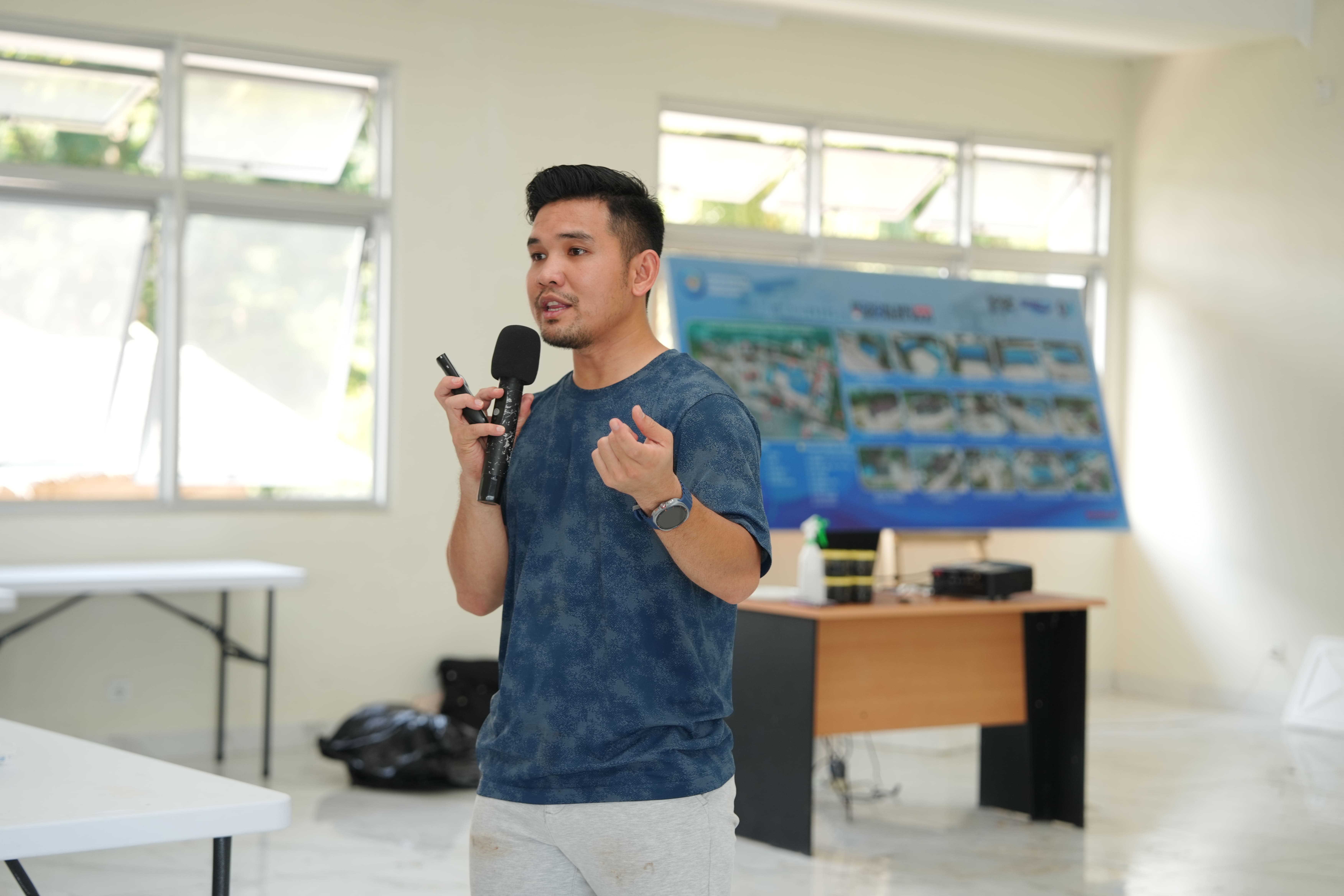
A well-handled tuna can fetch around twice the price of a poorly handled one. IPNLF’s seafood quality lead, Debriga Putra, explains how the Standards and Trade Development Facility (STDF) project will help small-scale handline fishers and suppliers in Indonesia and Malaysia hold on to that value, from the moment a fish is caught to the moment it is sold.
Living where I do, in Bitung in North Sulawesi, it’s impossible to miss the importance of tuna fisheries. Bitung is Indonesia’s biggest tuna port. The city sits close to the Philippines and to General Santos, another major tuna centre. This city is like a tuna city.
Over the years I’ve gained experience across the whole supply chain: catching the fish, buying the fish, quality control, management and selling. My path into the world of tuna began at university, where I studied processing technology . I later joined one of Indonesia’s largest tuna companies, a major supplier to the US market, starting as a quality control inspector. Variously, I’ve worked as a quality manager, purchasing manager and plant manager roles, before eventually becoming general manager, running my own business, handling everything from integration to processing and distribution.
Why tuna matters in Indonesia
Indonesia is an archipelago of thousands of islands, and many coastal families depend on fishing. In Bitung, most people work in the fisheries sector, whether at sea, in buying and supply, or in processing. A lot of people in Indonesia depend on tuna. Many small-scale fishers catch tuna and sell it for their livelihoods. Indonesia has a lot of small-scale fisheries, and we all live near the sea.
Better fish, not more fish
The people who bring tuna to our plates work incredibly hard to do so, yet they do not always see a fair share of its value. Part of the problem is that many fishers have never been shown what buyers mean by quality.
If they catch three fish and sell them at a low price, compared with catching one fish at a high price, it’s the same value. But maybe they can spend more time with their family.
Better quality also matters beyond the boat. Fish that falls short of export grade stays on the local market, so improving handling could raise the volume of tuna Indonesia exports. Most of that export tuna goes to the United States, followed by Asian markets such as Vietnam, Thailand, and Japan. Some of the product also ends up being sold in Europe, Australia and Canada.
Working with handline fishers on quality improvement
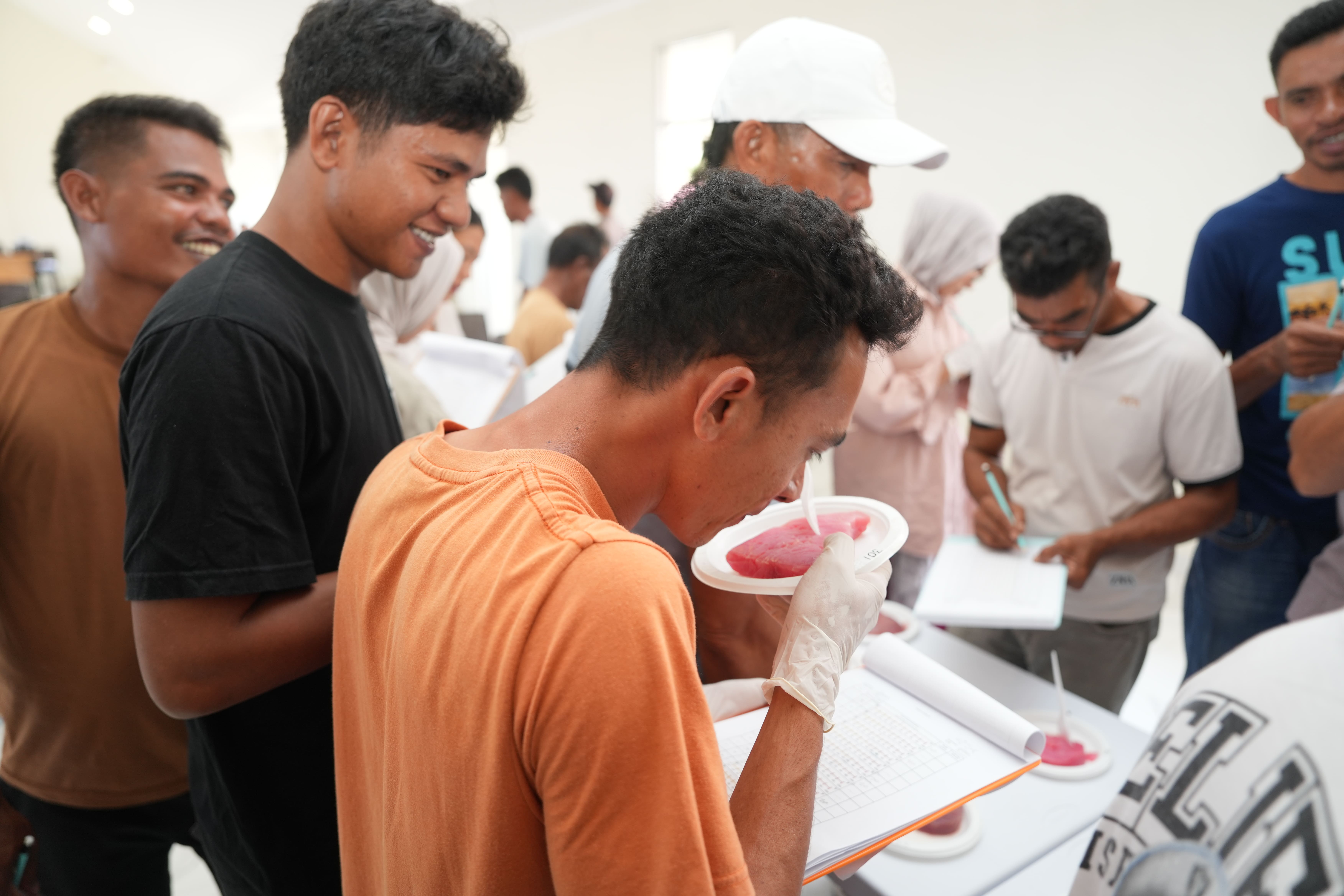
At the moment we’re working with handline fishing communities. Handline is very selective, with very low bycatch. We need to promote this way of catching tuna to the world, so that it’s not only us catching tuna, but our children can still catch tuna too.
Where quality is lost
We cannot improve the quality of tuna. We can only maintain it. So it has to start from the moment the fish is caught.
In small-scale fisheries, a fish typically passes from the fisher to a supplier or middleman, then to a processing facility, and only then to export. Quality can slip at every step. Often fishers don’t have enough ice to keep their fish cool. If a tuna’s core temperature does not fall quickly, it can develop yake, a Japanese term for heat-damaged flesh, and its price drops sharply. Poor handling and weak hygiene also create food safety risks, including histamine and salmonella. The problem is not only at sea: fish that reach a supplier within a few hours can still be saved, but only if the supplier has enough ice and clean facilities.
Conditions differ from place to place. In Morotai and at the Malaysian sites, fishers land whole fish, and the main challenge is getting enough good-quality ice. In Ambon, Seram and Buru, fishers cut the tuna into loins on board. That cools the fish faster, but small boats often lack the space and controls to do it hygienically.
A market that rewards quality
Processors must also make sure they pay different prices for each grade. Fishers work hard to maintain quality, because they know good fish earns a good price. If they don’t do this, fishers and suppliers see little reason to change. The whole supply chain should be fair so everyone plays their role in improving the quality.
What the training covers
The STDF project combines training with practical upgrades. Fishers will be trained in the following:
• How much ice to bring to maintain quality at sea, how to carry out Ikejime, a Japanese technique for killing, spiking and bleeding fish quickly. It gives better colour, avoids blood spots and helps the fish cool faster.
• How to carry out grading and evaluation, so fishers understand the standards export buyers apply.
• Sensory assessment, so fishers, suppliers and processors share the same standard when judging a fish by its smell, which can otherwise be very subjective.
• Good manufacturing practice and sanitation standard operating procedures, for suppliers and for fishers who loin on board.
• Fuel efficiency, which is especially important as fuel costs bite. In Seram, fishers who once made one-day trips now often stay out for two days to cover their costs.
Alongside the training, the project will upgrade supplier facilities and buying stations and improving surfaces to make them easier to clean. Improvements include closing buildings in, replacing wood with stainless steel, and providing proper cutting boards for loining on board.
Measuring the difference
Baseline data shows that more than 10% of fish are rejected because of poor handling. The project aims to bring that below 5%. Some rejections, such as those caused by parasites, have environmental causes that better handling cannot fix, so the focus is on the losses fishers and suppliers can control.
Tracking progress brings its own challenge. Factories keep good records, but many suppliers have no admin or data systems, so they cannot tell how much of their fish goes to export and how much stays local. Helping suppliers record this is part of the project, so that by the end, the team can compare results against the baseline.
Change that spreads
The work will run across five locations: Mabul and Semporna in Malaysia, and Morotai, Ambon, Seram and Buru in Indonesia. These are sizeable communities. A single village can have around 100 fishers and 100 boats, and on Seram alone the project will work in five villages.
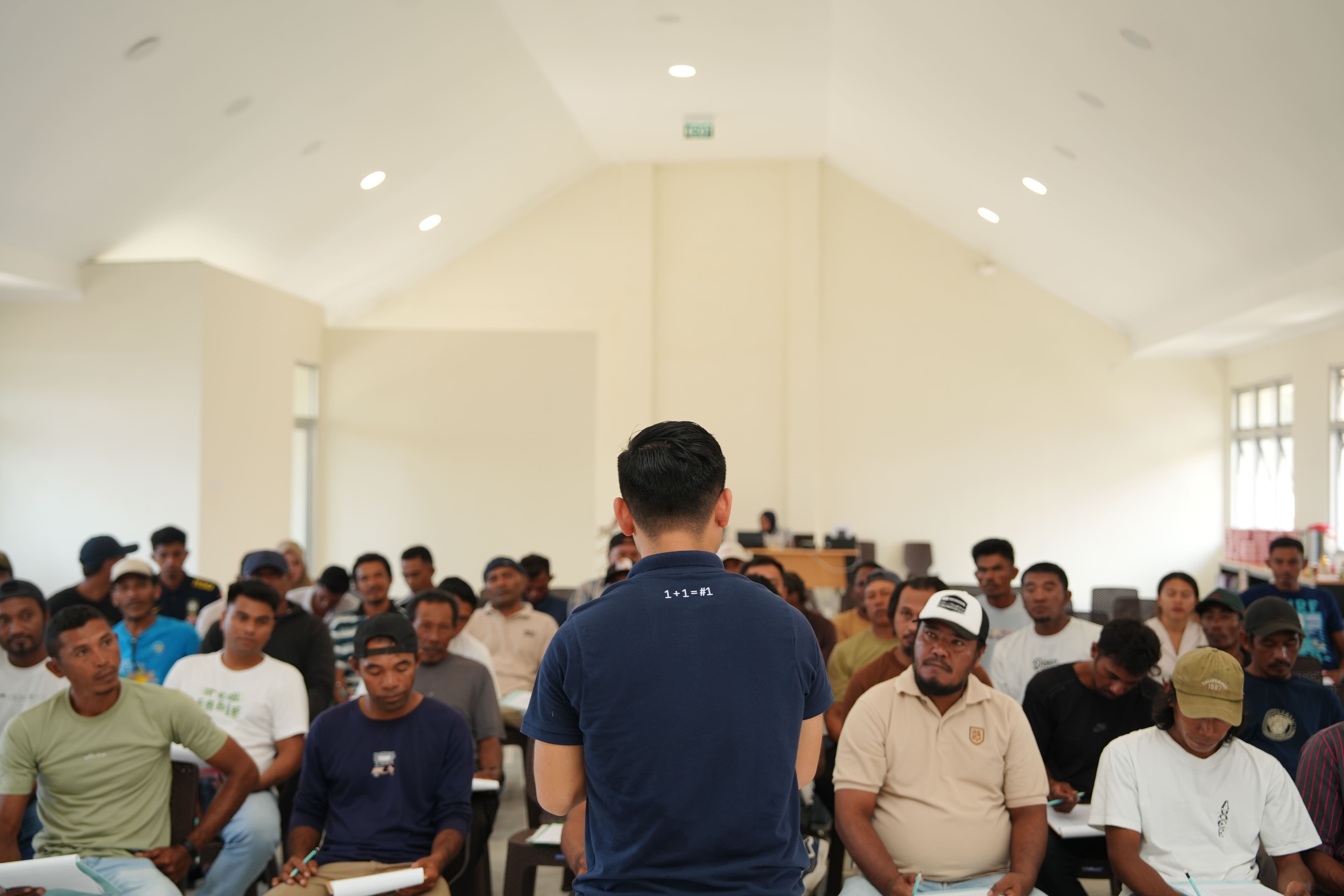
We hope that our impact will be multiplied when others see fishers who handle their catch properly earning more, they will follow, so that the benefits reach well beyond the fishers trained directly.
I know how hard fishers work to catch tuna, but sometimes they cannot get the money they deserve. That’s why I’m so excited about this project. It has a direct impact on fishers and suppliers.
The STDF project is delivered by IPNLF with small-scale handline fishers and suppliers in Indonesia and Malaysia.